
Noise - Make Money Creating
Noise IncBusiness
4.5816.00 Reviews
- Version
- 1.8.1
- Installs
- 100.00K
- Age Rating
- Everyone
Screenshots
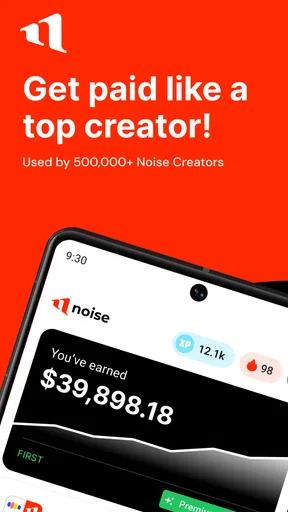
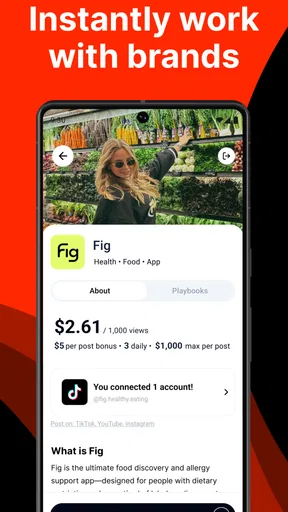
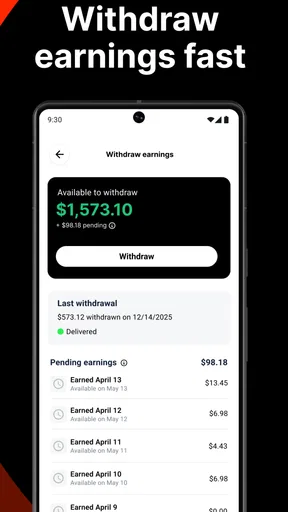
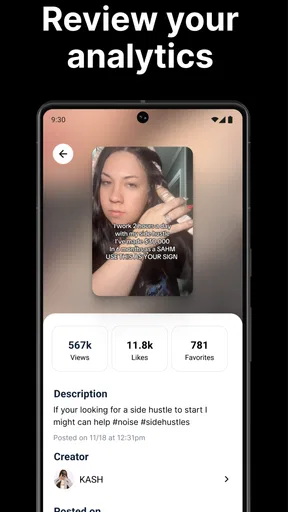
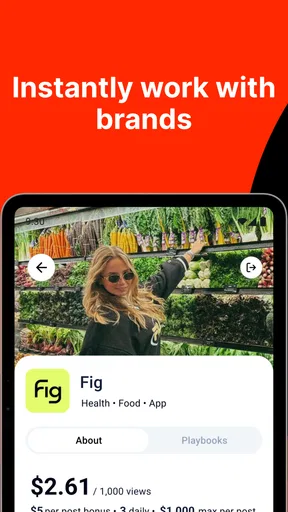
Our Review of Noise - Make Money Creating
 Analysis by Appyee
I approached Noise - Make Money Creating as a practical business app rather than another place to scroll casually. Its central idea is simple: publish content and potentially earn from it. That makes it interesting for people who already create posts, commentary, short updates, or other shareable material and want a more direct connection between publishing and income. It is free to use, aimed at Everyone, and developed by Noise Inc.
What stood out to me first was the narrowness of the concept. This is not trying to be a complete office suite, a traditional social network, or a full creator-production studio. It is built around the act of posting. That focus can be useful if I already have something to say and want a dedicated outlet, but it also means the app is only as valuable as the content workflow I bring to it.
How Noise fits into a shared household
A realistic example is a household where one person runs a small side project, another posts creative work, and everyone uses the same tablet or occasionally borrows one another’s phone. In that situation, Noise can be useful as a publishing destination, but I would treat each person’s activity as separate from the device itself. The important boundary is not who owns the phone; it is whose account is active and who is responsible for what gets posted.
I would not hand the device to a child and assume the Everyone rating answers every question about earning money or publishing publicly. An age label makes the app broadly accessible, but it does not replace a conversation about online identity, public posts, or financial expectations. For younger household members, I would want an adult to help with the initial setup and to understand what account is being used before any content goes live.
For adults sharing a device, the safest routine is straightforward: finish one person’s session, sign out if the app allows it, and avoid drafting or publishing while another person’s account is open. I would also keep a simple household rule that nobody posts on somebody else’s behalf without permission. That sounds obvious, but creator apps make it easy to confuse a saved draft, a profile, and the person currently holding the phone.
The app’s business angle makes this more important than it would be with a private notes tool. A post can represent a person, a hobby, or a small brand. If two family members use the same device, separating ideas before publication helps prevent accidental mixing of voices. I found that the best approach is to decide in advance who owns each content theme and to keep a short list of planned posts outside the app as a backup.
Setting expectations before the first post
The first thing I would clarify is what “make money” means in my own workflow. Noise gives the publishing process a commercial purpose, but earning should not be treated as automatic payment for every upload. I would use the app to test whether my content attracts interest and whether I can publish consistently, not as a replacement for a guaranteed income source.
That distinction matters in a shared home. Someone may see another family member posting regularly and assume the household is already earning. In practice, the useful early goal is learning what kind of content is worth continuing. I would set a modest publishing schedule, review the response to each type of post, and avoid spending money or making household plans around uncertain results.
Noise is free, which lowers the barrier to trying it. I can explore the workflow without first committing to a subscription. Still, free access does not remove the cost of time. Writing, editing, responding, and deciding what to publish all take attention. If I am only curious about monetization but do not enjoy creating, the app may quickly feel like another task rather than an opportunity.
My practical setup would be to choose one clear subject, prepare several ideas, and use the first sessions to understand how posting feels. I would not begin by trying to cover every possible topic. A focused theme makes it easier to judge whether the platform suits me, and it also prevents a shared household account from becoming a confusing mixture of unrelated posts.
Account boundaries are part of the workflow
Because this is a business-oriented app, I would separate personal browsing habits from creator responsibilities. A household member who only wants to look around should not automatically use the active creator account. Likewise, a person creating posts for a family project should agree on who can edit, publish, or respond before the project becomes regular.
I would also keep login details private between adults, even when everyone trusts one another. Trust is not only about preventing misuse; it is about keeping a clean record of who made a decision. If a post performs poorly or attracts an uncomfortable response, the person responsible should be easy to identify without turning the discussion into an argument about which device was used.
One useful habit is to write the intended audience beside each draft before publishing. A post meant for a niche interest group may not represent the same tone as a personal update. This small check is especially helpful when several people share a tablet, because it forces the publisher to pause and confirm that the correct account and purpose are in place.
I would also avoid treating a family member’s account as a convenient storage area for unfinished ideas. Drafts and publishing decisions belong with the person who will ultimately stand behind the content. If I want a shared project, I would define it openly as a shared project rather than quietly using somebody else’s profile.
Coordinating content without making the app complicated
Noise makes the most sense when it becomes one part of a wider routine. I would use a notes app, a paper list, or a shared planning document for ideas, then bring only the finished concept into Noise. That separation keeps the publishing app focused and reduces the temptation to compose every thought directly in the public-facing environment.
For a couple running a small hobby project, one person might collect ideas while the other handles final wording. I would agree on a simple handoff: the writer marks an item ready, the reviewer checks names and claims, and the account owner makes the final publishing decision. This avoids the common problem where several people edit the same idea but nobody knows whether it is actually ready.
A family member who creates visual or creative material could use Noise as the place where the finished work is presented, while keeping original files elsewhere. That is a valuable trade-off. The app supports the publishing moment, but I would not rely on a publishing platform as the only archive for work that took hours to make. Maintaining copies outside the app protects the household from losing its creative history if a device changes or an account is unavailable.
Another non-obvious advantage of this approach is that it makes results easier to interpret. If I change the topic, tone, and posting rhythm at the same time, I cannot tell what caused a response. By keeping a basic record of what I published and when, I can make better decisions about which ideas deserve more effort. Noise then becomes a testing ground for content, not merely a button I press whenever inspiration appears.
The limitation is that this method requires discipline. People looking for an all-in-one calendar, editing environment, team dashboard, or detailed business management system may find themselves switching between tools. I prefer that separation for a small household project, but a larger team may reasonably choose a more established creator or collaboration platform with deeper organization features.
What I would publish and what I would avoid
I would start with useful, repeatable material: practical observations, focused commentary, small lessons, or updates connected to a clear interest. Those formats give me something to improve from one post to the next. I would be cautious about posting private family details simply because they are easy to write about. A shared household is not automatically a shared audience.
For a teenager or younger user, I would encourage content that does not reveal routines, locations, school details, or other identifying information. The Everyone rating does not mean every publishing decision is equally appropriate for every age. An adult can help review the difference between harmless self-expression and information that could create unwanted attention.
I would also avoid promising earnings to anyone in the household. The app’s purpose may attract people who need money quickly, but content creation usually depends on patience, consistency, and audience interest. If the immediate goal is reliable payment, a conventional work platform or a clearly defined freelance arrangement may be a better fit than an app centered on building content.
For adults, the strongest use case is someone who already has a subject and wants to turn regular publishing into a possible income stream. The weakest use case is someone hoping to open the app, post anything at random, and receive predictable returns. Noise can support a creator habit; it cannot substitute for a creator habit.
Age, trust, and the meaning of a public post
I appreciate that the app is available to a broad audience, but broad availability calls for personal judgment. In a household, I would explain that posting is different from saving a thought privately. Even if a post seems casual, it can affect how others see the creator and may be copied or discussed outside the original context.
For shared-device use, I would make the account boundary visible. A separate device profile, a clear sign-out routine, or simply a verbal check before opening the app can prevent many mistakes. I would not assume that a child understands the difference between a draft and a published item, or between a personal opinion and an official household statement.
Adults should also discuss who handles messages or reactions if the app presents them during normal use. A younger person may not know when to stop engaging with a stranger or when to ask for help. Even without inventing special family tools, ordinary supervision and clear rules can make the experience more comfortable.
Trust works both ways. Younger creators deserve room to express themselves, while adults deserve confidence that the household’s shared device and accounts are not being used carelessly. I would therefore review the first few publishing sessions together, then gradually give more independence once the user understands the consequences of posting.
Privacy is another reason I would keep household content selective. A post about a project is different from a post that identifies everyone involved. If the goal is to make money from creating, the content should carry the value, not unnecessary details about the family behind it.
My experience with the app’s overall value
Noise Inc has positioned this app in a clear business category, and that clarity is its main strength. The store summary points directly toward posting and earning rather than presenting a long list of unrelated functions. I found that refreshing because I could judge the app by one question: does it help me publish consistently enough to explore a possible return?
The app has built noticeable interest, with over one hundred thousand installs and an average rating of four and a half from around six thousand ratings. Those figures suggest that many people find the basic idea worthwhile, although popularity alone does not tell me whether it fits my particular content style. I would still spend time testing the workflow instead of assuming that a positive reception guarantees results for every creator.
Its current version is 1.8.1, and it runs on Android 7.0 or later. That broad device coverage is helpful in a household where not everyone has a recent phone. A family can try it on an older compatible device rather than treating newer hardware as a requirement. I would still keep the operating system updated where possible, especially on a device used for account access and publishing.
Compared with ordinary social platforms, Noise feels more purposeful because the earning angle is part of the reason to post. Compared with professional creator suites, it is more approachable because I can begin with the central activity instead of building a complicated production pipeline. The trade-off is depth: people who need advanced editing, detailed campaign management, or a mature team workflow may be better served by specialized alternatives.
Compared with a simple blogging tool, Noise is more directly tied to the idea of monetizing content, but that focus can also shape expectations. A blog may be better for long-form ownership and structured archives, while Noise is more appealing when I want to publish shorter pieces and learn from ongoing activity. I would choose between them based on the content itself, not on the promise of earning alone.
Small habits that make the experience better
My first recommendation is to prepare a small queue of ideas before opening the app. This prevents the empty-screen problem and lets me judge whether Noise fits my actual routine. If I cannot produce a few worthwhile topics without forcing them, the platform may not be the right creative outlet for me.
Second, I would read every post once as if I were a stranger seeing it without household context. Family members often understand shorthand that an outside reader will not. Removing private jokes, unexplained references, and accidental personal details usually makes the content clearer and safer.
Third, I would review performance by content pattern rather than by one isolated post. A single result can be affected by timing, subject, or wording. Keeping a lightweight record helps me identify whether practical advice, personal commentary, or creative work is actually worth repeating.
Fourth, I would create a publishing pause for shared devices. Before tapping the final action, I would confirm the account name, the intended audience, and whether the post contains anyone else’s information. This takes only a moment and is more valuable in a household than a rushed publishing streak.
Finally, I would keep original writing and media outside the app. That gives me flexibility to revise, reuse, or move a project elsewhere. It also prevents the uncomfortable situation where a household member’s only copy of important work exists inside an account that somebody else controls.
Who should use Noise and who should skip it
I would recommend Noise to an adult creator, hobbyist, or small household project that already has a clear subject and wants a focused place to publish. It is also worth trying for someone who wants to explore whether consistent content can become a modest business activity without paying an entry fee.
I would be more cautious for anyone who needs guaranteed income, extensive collaboration tools, or a private family journal. The app’s public-facing business purpose does not make it a substitute for secure personal storage, formal accounting, or a private messaging space. A person who mainly wants to organize household tasks would probably get more value from a productivity app.
I would also skip it for a child using a shared device without adult guidance. The broad age rating makes access possible, but publishing and money-related expectations still require maturity. An adult should help establish account ownership, review early posts, and make sure the young user knows not to share sensitive household information.
For my own household, I would use Noise as a focused experiment rather than a promise. I would define the project, separate accounts, preserve the original work elsewhere, and review results after a consistent period. That keeps enthusiasm from turning into pressure and makes it easier to stop if the workflow does not suit us.
Overall, I see Noise - Make Money Creating as a straightforward option for people who want publishing to have a business purpose. Its free access and clear focus make experimentation easy, while its limitations remind me that the creator work still happens outside the app: choosing a subject, making something useful, protecting personal boundaries, and showing up consistently. The best reason to try it is not the hope of effortless money, but the chance to build a more deliberate publishing habit.
In a shared household, my verdict is positive with boundaries. I would recommend it when one person clearly owns the account or when a family project has agreed responsibilities. I would not treat it as a casual communal profile, a guaranteed income source, or an unsupervised space for younger users. Used with that understanding, Noise Inc’s app can be a practical starting point for turning regular creative work into a real publishing routine.
Verdict
Strengths of Noise - Make Money Creating
- Simple way to earn from unused internet bandwidth
- Runs quietly in the background with minimal setup
- Clear balance tracking and payout progress
- Works across multiple devices on supported platforms
- Useful for users with stable, unlimited internet plans
Limitations of Noise - Make Money Creating
- Earnings can be very low depending on demand and location
- May increase data usage and affect limited internet plans
- Requires background activity that can impact battery life
- Payout methods and minimum thresholds may restrict withdrawals
- Privacy-conscious users may dislike sharing connection bandwidth
Similar Picks in This Category
View All
LinkedIn: Community & Network
LinkedIn3.8

Zoom Workplace
zoom.com4.1

Microsoft Teams
Microsoft Corporation4.6

Meta Business Suite
Meta Platforms, Inc.4.6

Webex Meetings
Cisco Systems, Inc.4.5

TeamViewer Remote Control
TeamViewer4.4
Frequently Asked Questions
What is Noise - Make Money Creating?
Noise - Make Money Creating is a social content platform where users can publish posts, share ideas, interact with other members, and potentially earn money from their activity. The app is designed around creator participation, so it may appeal to people who enjoy writing, discussing topics, building an audience, or experimenting with different types of online content rather than simply browsing a traditional social network.
How can users make money with Noise?
Earning opportunities on Noise generally depend on creating content, attracting engagement, and meeting the platform’s eligibility requirements. Rewards, creator programs, or monetization features may vary by region, account status, and current app policies. Before investing significant time, users should carefully review the in-app rules, payout conditions, minimum withdrawal limits, supported payment methods, and any restrictions affecting how earnings are calculated.
Is Noise - Make Money Creating free to download and use?
The app can generally be downloaded without an upfront purchase, but being free to install does not necessarily mean that every feature is completely cost-free. Users should check the store listing and the app’s terms for possible optional purchases, paid promotional tools, or other charges. Mobile data usage may also apply, especially when uploading media, watching content, or using the platform frequently.
Is Noise safe and suitable for all users?
Noise includes user-generated content and social interaction, so the experience can differ considerably depending on the communities and posts you encounter. The app may provide reporting, blocking, moderation, and privacy controls, but no social platform can guarantee that all content is appropriate or that every interaction is trustworthy. Users should avoid sharing sensitive personal information and review the age rating and privacy settings before participating.
What permissions and account information does Noise require?
Like many social and creator-focused apps, Noise may request access to information needed for account creation, personalization, notifications, content uploads, or communication with other users. The exact permissions can change between versions and devices. Before accepting them, review the privacy policy and your operating system’s permission screen. You can usually deny nonessential access, although doing so may limit certain publishing or interaction features.
